Washington’s Clean Fuel Standard exceeds expectations during its 1st year
A new report from the Washington Department of Ecology shows that the state’s Clean Fuel Standard eliminated an estimated 2 million tons of greenhouse gases in 2023 for less than 1 cent per gallon of gasoline.
That’s the equivalent of taking nearly 450,000 cars off the road or eliminating emissions from one of the state’s biggest refineries.
Transportation is Washington’s largest source of greenhouse gases, accounting for about 40 percent of statewide emissions.
The Clean Fuel Standard reduces emissions by driving investment in low-carbon transportation fuels such as biodiesel, ethanol and electricity for vehicle charging.
The policy’s first year alone is also expected to generate millions of dollars of investments in these fuels, many of which already cost less than gasoline and diesel, by fuel producers, transit agencies, utilities, fleet owners and more.
Combined with policies that expand access to cleaner vehicles, the Clean Fuel Standard gives households and businesses greater access to affordable clean-transportation options.
In addition to its climate and economic benefits, the Clean Fuel Standard improves public health.
An independent analysis from 2022 showed the policy will contribute to significant reductions of some of the most harmful air pollutants coming from Washington’s roadways.
“This report demonstrates that the Clean Fuel Standard is achieving what it was designed to do—giving Washington a cost-effective tool to slash millions of tons of carbon pollution, drive investment in new technology and protect clean air in our state," said Casey Sixkiller, director of the state ecology department.
The Clean Fuel Standard displaces the use of fossil fuels by increasing supplies of cleaner fuels, many of which cost less than gasoline and diesel.
The program works by setting an annual carbon-intensity requirement for transportation fuels that declines over time.
Carbon intensity is defined by the total greenhouse gases emitted during the entire lifecycle of the fuel, from production to transport and use.
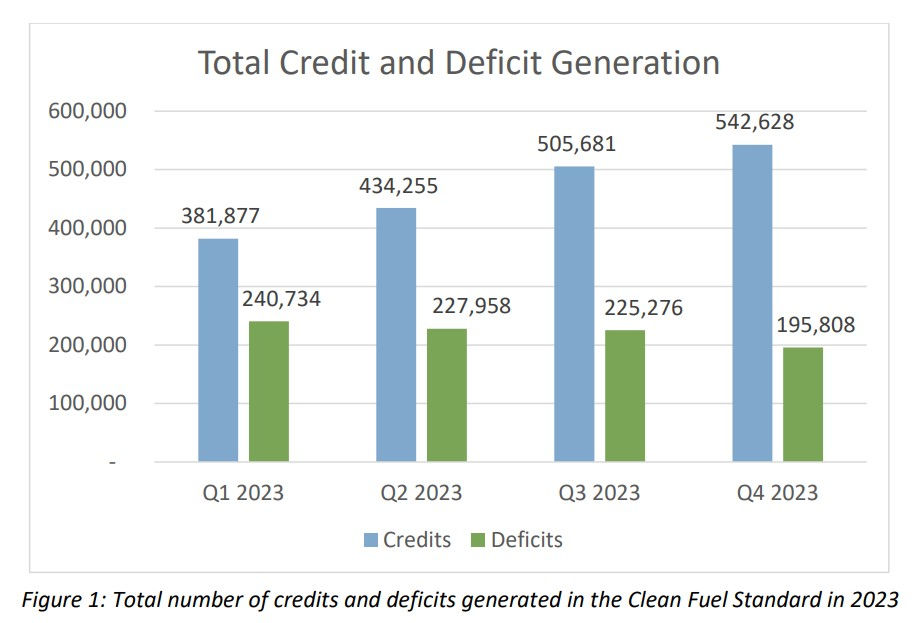
Fuels with a carbon intensity lower than the standard generate credits, while fuels with a carbon intensity above the standard generate deficits.
Fuel producers with deficits must then purchase credits to zero out their deficits, creating a revenue stream for low-carbon fuel producers to reinvest in their operations.
For example, in 2023 utilities generated about 600,000 credits.
Selling those credits at the November 2025 average price of $27 would yield $16 million for electric-vehicle infrastructure in local communities.
Each Clean Fuel Standard credit is equal to 1 metric ton of greenhouse-gas emissions avoided.
In 2023, close to 400 participants generated 1.9 million credits.
This was more than double the reduction in carbon intensity required under state law.
Clean fuels can mean anything from low-carbon fuels like ethanol or biodiesel to the electricity used to “fuel” electric cars, which, in Washington, come largely from renewable resources like hydropower, wind and solar.
The emissions reductions seen in the Clean Fuel Standard’s inaugural year were driven mainly by renewable diesel, ethanol and electricity.
Some Washington refineries expanded their ability to produce renewable diesel or invested in efficiency improvements that lowered the carbon intensity of all the fuels they produce.
Electric-vehicle charging stations at multifamily apartment buildings, public-transit agencies, grocery stores, co-op electric utilities and other locations also earned much of the first year’s clean-fuel credits.
During the 2025 legislative session, lawmakers strengthened the Clean Fuel Standard by changing the required reduction in carbon intensity from 20 percent to 45 percent by 2038.
The state ecology department plans to begin implementing the changes later this month.
Lawmakers also included the option to require a 55 percent carbon-intensity reduction by 2038 under certain conditions, including if the state’s vehicle-emissions standards become unenforceable.
The ecology department has paused the enforcement of those standards as the state challenges federal actions attempting to overturn them.
Litigation is pending.