Strong biodiesel demand, economics boost FutureFuel’s Q3 biofuel revenue by 1,137%

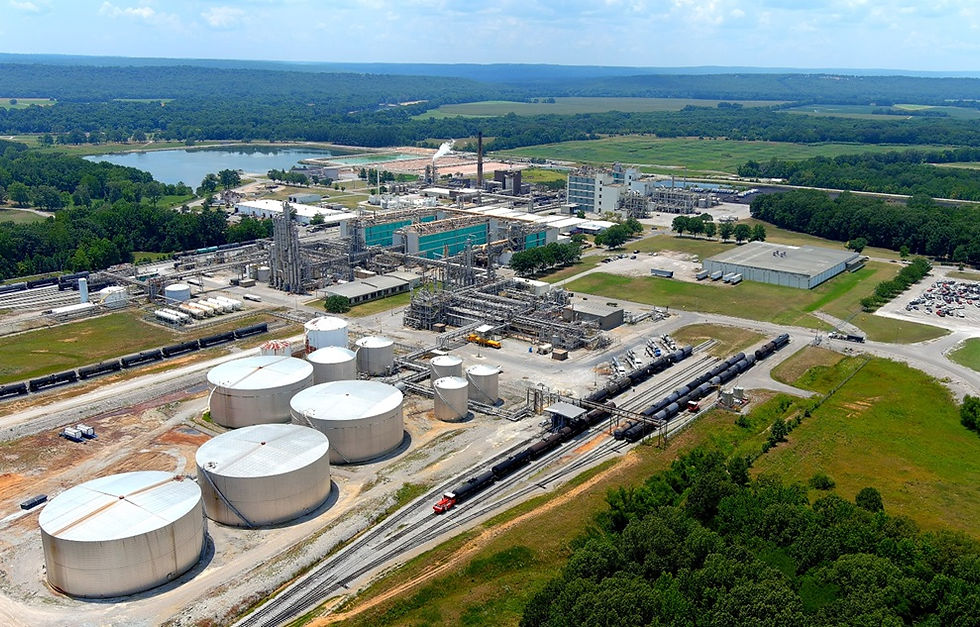
Roeland Polet, chairman and CEO of FutureFuel Corp., said in his company’s third-quarter financials that results from the three-month period reflect strong biodiesel demand and improved production economics, but these were offset by extended maintenance on two dedicated chemicals production units that weighed on volumes, operating leverage and profitability in the period.
“Chemicals production has since returned to normalized rates, biodiesel demand remains robust, and production economics remain favorable, positioning us for a solid finish to 2026,” Polet added.
He said the chemicals segment sales volume declined 27 percent on a year-over-year basis due to turnaround activity at two customer process units during the third quarter.
Despite lower sales volumes, chemical revenue increased $1.3 million to $16.9 million in the third quarter, given incremental contributions from capacity additions completed in late 2025, Polet explained.
“During the third quarter, we completed a planned turnaround at a dedicated customer process unit and pulled-forward a turnaround at another customer process unit where a customer paused their normal order cadence to rebalance inventory levels,” he said. “This customer, which has committed $41 million of customer-funded capital investment at Batesville over the next two years, expects to resume a normal cadence during the fourth quarter 2026. Together, these turnarounds reduced third-quarter adjusted EBITDA by approximately $4.3 million.”
Polet said the company’s biofuels segment sales volume increased 11.3 million gallons versus the prior-year quarter, driven by strong demand and efficient plant utilization.
Strong sales volumes and improved pricing were offset, however, by elevated feedstock costs and derivatives losses, resulting in a segment gross loss in the period, Polet noted.
“Biofuel production reached multiyear highs, driven by improved plant reliability, as utilization reached 83 percent during the third quarter versus 56 percent in the second quarter, in response to favorable market conditions,” he said. “In the fourth quarter, we expect to sell $1.5 million of [renewable identification number (RIN) credits] generated from third-quarter biodiesel production and to recover $2.3 million in derivative losses tied to the corresponding sale of physical inventory. Through early November, we have booked orders for more than 90 percent of our fourth-quarter biodiesel production capacity, well ahead of prior expectations. Further, we expect demand to strengthen entering 2027, as recent regulatory changes narrow the RIN-equivalence advantage previously enjoyed by renewable diesel producers and improve the competitive position of biodiesel producers like FutureFuel.”
Polet said looking ahead, FutureFuel plans to continue restoring its biodiesel business to more optimal production rates as market conditions continue to improve, consistent with what the company experienced in the third quarter.
“Operationally, we recently launched a productivity initiative to improve efficiency and optimize our cost structure,” he said. “Working with third-party advisers, we have identified multiple near-term opportunities to improve efficiency at Batesville, including re-refining waste streams into higher-value products. Glycerin, our largest biodiesel waste stream, can be refined and sold for roughly three times the per-gallon value of unrefined glycerin at minimal incremental cost to us, representing potential annual profit increase of up to $5 million to $10 million beginning in 2027. In an inflationary environment, we also continue to pass through higher energy, material and labor costs under customer agreements that provide for cost indexing.”
The company’s total revenue increased 361.3 percent to $104.7 million during the third quarter of 2026, up from $22.7 million in the prior-year period.
The $82 million increase comprised $36.3 million from volume and product mix and $45.7 million from pricing, principally in biofuels.
Total gross loss was $5.4 million during the third quarter of 2026 versus a gross loss of $6.5 million during the third quarter of 2025.
Third quarter results included $8.7 million of net derivative losses, of which $8.3 million were realized losses.
At Sept. 30, the company held approximately 0.7 million internally generated RINs with a value of $1.5 million for delivery in the fourth quarter.
The company reported net loss of $8.4 million during the third quarter versus a net loss of $9.2 million in the same period last year.
FutureFuel’s biofuel-segment revenue was $87.8 million in the third quarter of 2026, compared with just $7.1 million in the same period last year.
The increase was driven by greater regulatory clarity, record-high renewable volume obligation levels and strong operational execution during the quarter.
The company reported a gross loss in the segment of $9.8 million in the third quarter, compared with a gross loss of $2.4 million in the prior-year period.
Significantly higher sales volumes and stronger pricing realization were more than offset by elevated input costs.
The third quarter gross loss included hedging losses of $2.3 million, which are expected to be offset when the underlying physical commodity positions are sold in future periods, and excluded $1.5 million of RIN inventory valuation generated in the third quarter and sold in the fourth quarter.
“Market conditions in the Biofuels segment have improved meaningfully on a year-to-date basis following improved regulatory clarity around domestic renewable fuel blending obligations, tax incentives and the treatment of domestically produced biofuels,” the company stated. “Biofuels capacity utilization increased to 83 percent in the third quarter, versus 56 percent in the second quarter, and sales volumes are expected to remain strong entering the fourth quarter and into 2027. While demand conditions are expected to remain robust over the near to medium term, input costs for soybean oil and other raw materials remain elevated, which is expected to impact biofuels segment gross profit per gallon sold over the near term.”
The company stated that it currently anticipates favorable demand trends within its core chemicals segment, improved plant reliability and an improved regulatory climate for its biofuels segment will position the business to deliver positive adjusted EBITDA in the fourth quarter and full-year 2026—excluding unrealized gains and losses on derivative instruments and inventory valuation adjustments.