‘State of Sustainable Fleets 2026 Market Brief’ shows renewable diesel, biodiesel adoption grows
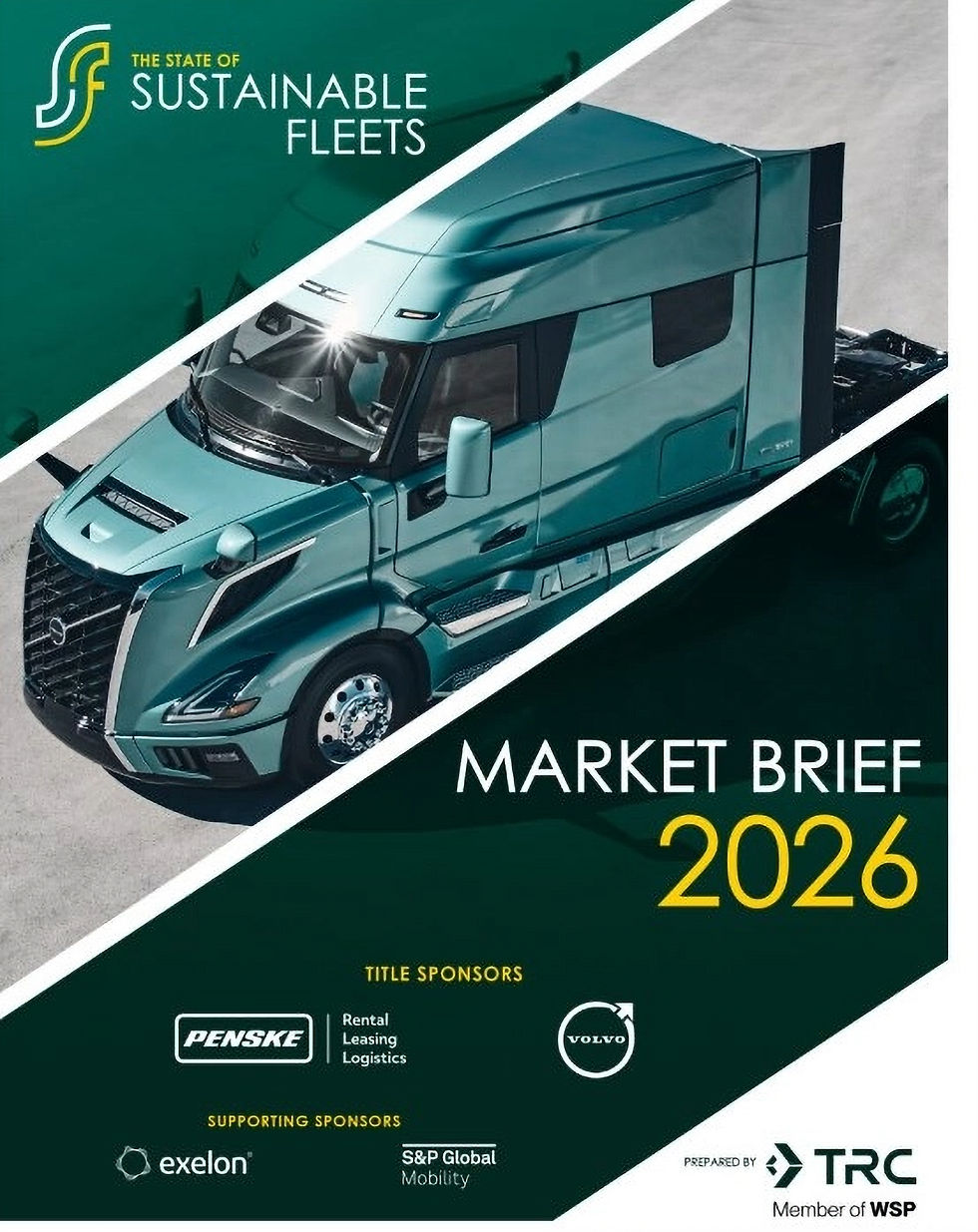
Now in its seventh year, “The State of Sustainable Fleets 2026 Market Brief,” released May 4, delivers a comprehensive, technology-neutral assessment of an industry building resilience through powertrain and fuel diversification amid an extended period of uncertainty.
The market brief was unveiled at ACT Expo in Las Vegas, Nevada—North America’s largest fleet-technology conference and expo, now in its 16th year.
It was authored by TRC Companies, a WSP member company and leading construction, engineering and consulting firm.
The market brief arrives as commercial fleets face a convergence of pressures that industry analysts are calling the most complex operating environment in modern trucking history.
A prolonged freight recession now in its third consecutive year has been compounded by sweeping federal policy reversals, tariff-driven cost increases of up to $35,000 per new truck, and geopolitical volatility affecting global supply chains and energy markets.
The rollback of federal greenhouse-gas (GHG) vehicle standards, the expiration of zero-emission vehicle (ZEV) tax credits worth up to $40,000 per eligible medium- and heavy-duty vehicle, the cancellation of federal clean-transportation funding, and the nullification of California’s clean-truck regulations have restructured the policy landscape from a federally driven system to a decentralized patchwork of state policies and market-driven factors.
Yet across all this disruption, the data reveals a picture of an industry in structural adaptation rather than retreat.
TRC estimates that more than $5 billion in state, local and utility-program funding remains available annually through 2028 supporting clean-fleet investment.
Fleet-technology markets are maturing across nearly every fuel and drivetrain type.
Artificial intelligence (AI) has moved from pilot projects to mainstream fleet operations.
And the central strategic finding of this year’s market brief is clear: fleets managing total cost of ownership (TCO) across a portfolio of powertrain technologies—rather than concentrating on a single solution or waiting out the uncertainty—are demonstrating measurably greater resilience.
In a freight economy where external shocks can rapidly change the economics of any single technology, including conventional diesel, powertrain diversification has become both a financial strategy and a risk-management imperative.
Penske Transportation Solutions and Volvo Trucks North America serve as title sponsors of this latest market brief.
Exelon Companies and S&P Global Mobility serve as supporting sponsors.
Each sponsor contributes expertise and data that enhances credibility of the findings.
The 2026 market brief identifies key findings shaping the sustainable fleets landscape.
For diesel vehicles, the report highlights efficiency gains and how drop-in renewable fuels are displacing conventional diesel at scale:
New Class 8 tractor registrations declined 16 percent in 2025 according to S&P Global Mobility data amid the prolonged freight recession, tariff-driven cost increases and economic uncertainty. Fleets and OEMs have focused on diesel fuel efficiency: More than one-third of survey respondents reported using efficiency technologies, with leading heavy-duty adopters in the logistics sector achieving 8.5-plus miles per gallon (mpg) and best-in-class operations demonstrating 11.5 mpg or higher.
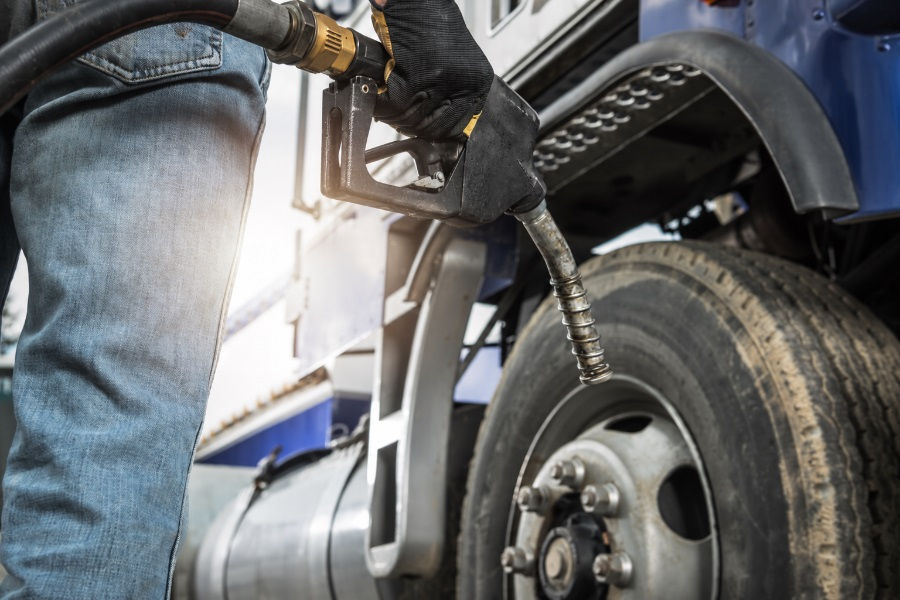
Renewable diesel and biodiesel—drop-in fuels that work in existing diesel engines and infrastructure—are displacing conventional diesel at scale: The two fuels combined to replace 74 percent of conventional diesel used in California transportation in 2024 and 71 percent in the first three quarters of 2025. More than half of annual fleet survey respondents now report using renewable diesel or biodiesel, with B99 biodiesel adoption expanding in 2025.
The EPA’s Clean Trucks Plan establishing model-year 2027 NOx and particulate matter standards for medium- and heavy-duty vehicles remains on track, with incremental per-vehicle costs expected to range from $8,000 to $18,000. Final warranty and useful-life provisions are still pending.
To access the full 2026 market brief, visit StateofSustainableFleets.com.